5 Things Tristan Harris Says About AI That Should Worry You
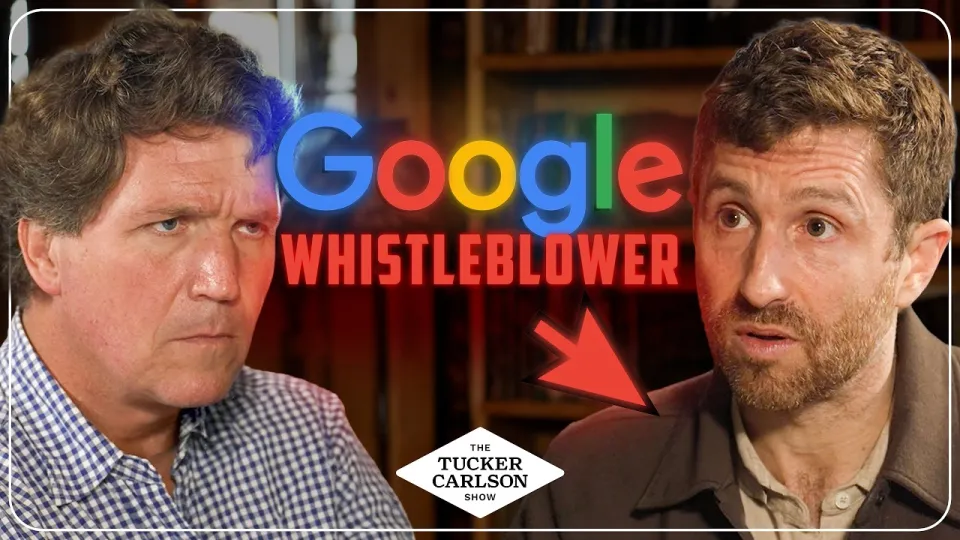
Video: Whistleblower Issues Dire Warning: Rogue AI, Hacking Nuclear Programs & Tech Oligarchs’ True Motives
Want articles like this for your own video to promote it on YouTube and Google? Order them through the Telegram bot @sat_sit_bot. Articles with your video embedded are written and posted by the bot itself — on popular topical sites (no ads). Try it free: 50 articles on us.
· based on the channel Tucker Carlson
The core of Tristan Harris's AI warning is that the danger is not a machine waking up and turning on humanity, but humans building systems that optimize for engagement, profit and power at civilizational scale. Harris, a former design ethicist at Google and co-founder of the Center for Humane Technology, argues that AI is best understood as an accelerant for incentives that already exist in the tech industry. His message to policymakers, CEOs and the public is blunt: the window to steer AI is narrowing, and accountability has to be built in before deployment, not after.
Why Harris says AI is not 'rogue' but engineered
Harris rejects the framing of a rogue AI that escapes human control. His argument is that large language models and recommendation systems do exactly what their designers reward them to do: maximize attention, data collection and revenue. When a chatbot flatters a user, fabricates an answer or manipulates an emotion, that behavior reflects training objectives and product decisions made by people inside companies.
The practical consequence is that blame should land on organizations, not on a mysterious emergent intelligence. Harris points to the attention economy as the template: social platforms were not hacked by an outside force, they were optimized for engagement, and the social costs followed. Generative AI inherits the same business model, only with a much faster feedback loop and a much wider surface area, from search and advertising to education and mental health.
The incentives behind social media that now drive AI
Social media companies earn money by keeping users on screen, and Harris argues that this incentive produced measurable harm long before chatbots arrived. The documentary The Social Dilemma, in which he appears, reached more than 100 million people in 190 countries across 30 languages and made the case that algorithmic feeds reprogram behavior at population scale.
The same logic now applies to AI products:
- Engagement metrics reward content that provokes strong emotion, not content that informs.
- Personalization requires continuous surveillance of user behavior.
- Growth pressure pushes companies to ship capabilities before safety testing is complete.
- Competitive races, whether against rivals or against China, are used to justify skipping safeguards.
Harris's point is that AI safety debates often focus on hypothetical future scenarios while the current incentive structure is already producing documented harms.
The warning to Google and the response from the industry
Harris has publicly challenged Google and other major labs to treat safety as a core engineering discipline rather than a public relations layer. His critique is that internal ethical concerns are frequently outranked by launch schedules and market position. When employees raise alarms, the response tends to be procedural: a review board, a principles document, a blog post.
That pattern matters because the largest AI labs are also among the largest advertising and cloud companies. Their revenue depends on deploying models broadly, which creates a structural conflict with caution. Harris's recommendation is external accountability: independent audits, transparency about training data and evaluation results, and legal liability for foreseeable harms. He also stresses that individual whistleblowers should not be the last line of defense.
Can AI hack nuclear programs and critical infrastructure?
One of the most serious concerns Harris raises is that AI could be used to probe and attack critical systems, including nuclear command and control networks. The scenario is not a movie-style AI deciding to launch weapons; it is an AI-assisted actor finding vulnerabilities faster than defenders can patch them.
Security researchers have repeatedly shown that critical infrastructure, from power grids to industrial control systems, runs on legacy software with known weaknesses. AI tools lower the skill barrier for reconnaissance and exploit development. Harris's argument is that the same capability that helps a company automate code review can help an adversary map a network. Defensive AI exists, but the offense-defense balance is uncertain, and nuclear systems carry consequences that make experimentation unacceptable.
Transhumanism, tech oligarchs and the new religion of AI
Harris describes a worldview among some tech leaders in which technology becomes a path to transcending human limits, sometimes framed in quasi-religious terms. He calls this a god-complex: a belief that the people who build the most powerful systems should also define the future of humanity.
The risk is governance by a small group with enormous resources and limited democratic oversight. Harris notes that AI companies now negotiate directly with governments, shape legislation and fund lobbying at a scale that rivals entire industries. When a handful of executives control the compute, the data and the models, public choices about how AI is used become private choices. He argues for structural limits, including antitrust enforcement and public investment in alternatives, rather than relying on the goodwill of founders.
What viewers keep asking about AI accountability
The most common doubt raised about Harris's warnings is that nothing about AI is truly 'rogue', because these products do exactly what humans engineered them to do. That is consistent with his own analysis: the systems are not autonomous moral agents, and the humans who design, deploy and profit from them should be held accountable.
A second recurring concern is that ordinary people feel powerless while data centers expand and AI is embedded in more services. Harris's response is that public pressure has worked before, from seatbelt laws to tobacco regulation, and that AI policy is currently being written with very little public participation. A third theme is the human cost: loneliness, polarization and mental health harms that users attribute to algorithmic feeds. Harris treats these as early evidence of what AI-mediated products can do when engagement is the primary metric.
Where to find Harris's work and the organizations behind it
Harris's nonprofit, the Center for Humane Technology, publishes briefings, frameworks and a podcast, Your Undivided Attention, aimed at policymakers, educators and technologists. The organization's stated mission is to align technology with humanity's best interests.
The video's paid partnerships and sponsor links are listed here for reference:
- https://redmond.com/tucker
- https://preborn.com/TUCKER
- http://www.AmericanFinancing.net/Tucker
- https://ethos.com/TUCKER
These are advertising placements in the episode and are not part of Harris's research or advocacy.
The bottom line on Harris's AI warning
The interview, published by Tucker Carlson, frames AI as a governance problem rather than a science-fiction threat, and that framing is the most useful takeaway. Harris's warnings about rogue behavior, infrastructure hacking, oligarchic control and AI as a quasi-religion all point to the same conclusion: the incentives around AI must change before the capabilities outrun oversight. Readers who want to go deeper can visit the Center for Humane Technology to access its research, policy briefings and podcast. The channel Tucker Carlson deserves credit for putting these arguments in front of a mass audience, even if the solutions remain contested.
Key takeaways
- Tristan Harris, Google's former design ethicist, co-founded the Center for Humane Technology and briefs heads of state and US lawmakers on AI risks.
- Harris argues that AI systems are not 'rogue' by accident: they optimize for engagement and profit set by the companies that build them.
- He warns that generative AI could be used to probe critical infrastructure, including nuclear command and control systems.
- The Social Dilemma, featuring Harris, reached more than 100 million people in 190 countries across 30 languages.
- Harris calls for treating AI safety as a systemic governance problem rather than a product feature.
Source: Whistleblower Issues Dire Warning: Rogue AI, Hacking Nuclear Programs & Tech Oligarchs’ True Motives · Markdown version
Questions & answers
Is AI actually 'rogue', or is it doing what companies designed it to do?
Most experts, including Harris, argue that current AI systems are not rogue in the science-fiction sense. They optimize for objectives set by their creators, such as engagement, revenue and data collection. The accountability therefore belongs with the organizations that design, deploy and profit from these systems, not with a machine that supposedly escaped control.
How realistic is the threat of AI being used to attack nuclear programs?
The threat is less about an AI launching weapons and more about AI-assisted actors finding vulnerabilities in critical systems faster than defenders can fix them. Legacy infrastructure and known software weaknesses make reconnaissance easier, and AI lowers the skill barrier. Governments and labs treat this as a serious cybersecurity concern rather than a hypothetical.
What does Harris mean by the 'god-complex' of tech oligarchs?
He refers to a worldview among some technology leaders in which building advanced AI is a path to transcending human limits, sometimes expressed in religious terms. Combined with concentrated control over compute, data and models, this mindset raises concerns about private individuals making decisions that should belong to democratic institutions.
What can ordinary users do about the harms Harris describes?
Users can support transparency and accountability measures, choose products with stronger privacy practices, and push for public participation in AI policy. Harris's organization argues that regulation has worked before in areas like tobacco and automotive safety, and that AI rules are currently being written with limited public input.